

The digital supply chain is the set of third-party software, services, and access that an organization builds into its own operation: open source libraries, SaaS, APIs, CDNs, integrators, and providers holding active credentials. Every link inherits part of the company's exposure, and almost none of them show up in the asset inventory security actually manages.
The most critical risks do not always come from what the organization directly controls. A good share of the exposure arrives indirectly: through third parties, outsourced tools, or code dependencies nobody administers. The weak link is usually whoever you hired, or whoever they hired.
With the growth of hybrid infrastructures and the accelerated adoption of SaaS, IaaS, and other forms of technology outsourcing, the digital supply chain has become a critical extension of the attack surface of any organization. Subdomains, temporary instances, or old dependencies can remain exposed for months without being noticed, until they are exploited.
Unintentional Exposure: The Risk That Goes Unnoticed
It is not uncommon to find old systems still accessible over the internet, even though they have already been officially decommissioned. They may be linked to support portals, partner integration APIs, documentation repositories, or technical support tools.
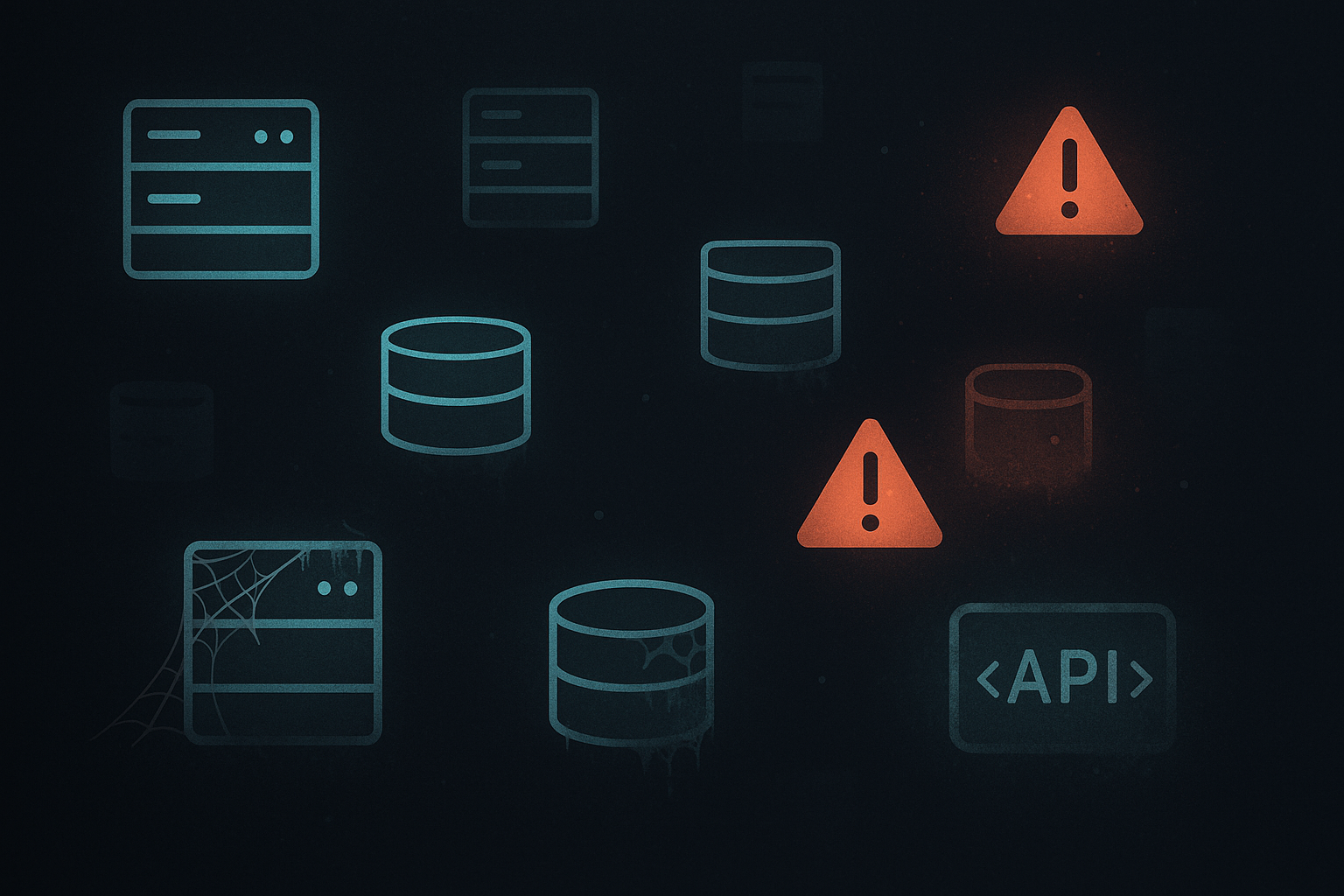
These forgotten assets often carry with them:
- Authentication tokens or unprotected APIs;
- Services with default configurations, without encryption or authentication;
- Exposed sensitive data due to a lack of security in access control;
- Outdated scripts or plugins with known vulnerabilities.
The real problem starts when those inherited or neglected exposures become the entry point for what comes next: supply chain compromise, lateral movement, ransomware.
When the Supplier Is the Vector
Modern companies use dozens, sometimes hundreds, of external tools. Each of these integrations represents a shared risk surface, and the mutual trust between systems can be exploited if any link in the chain is vulnerable.
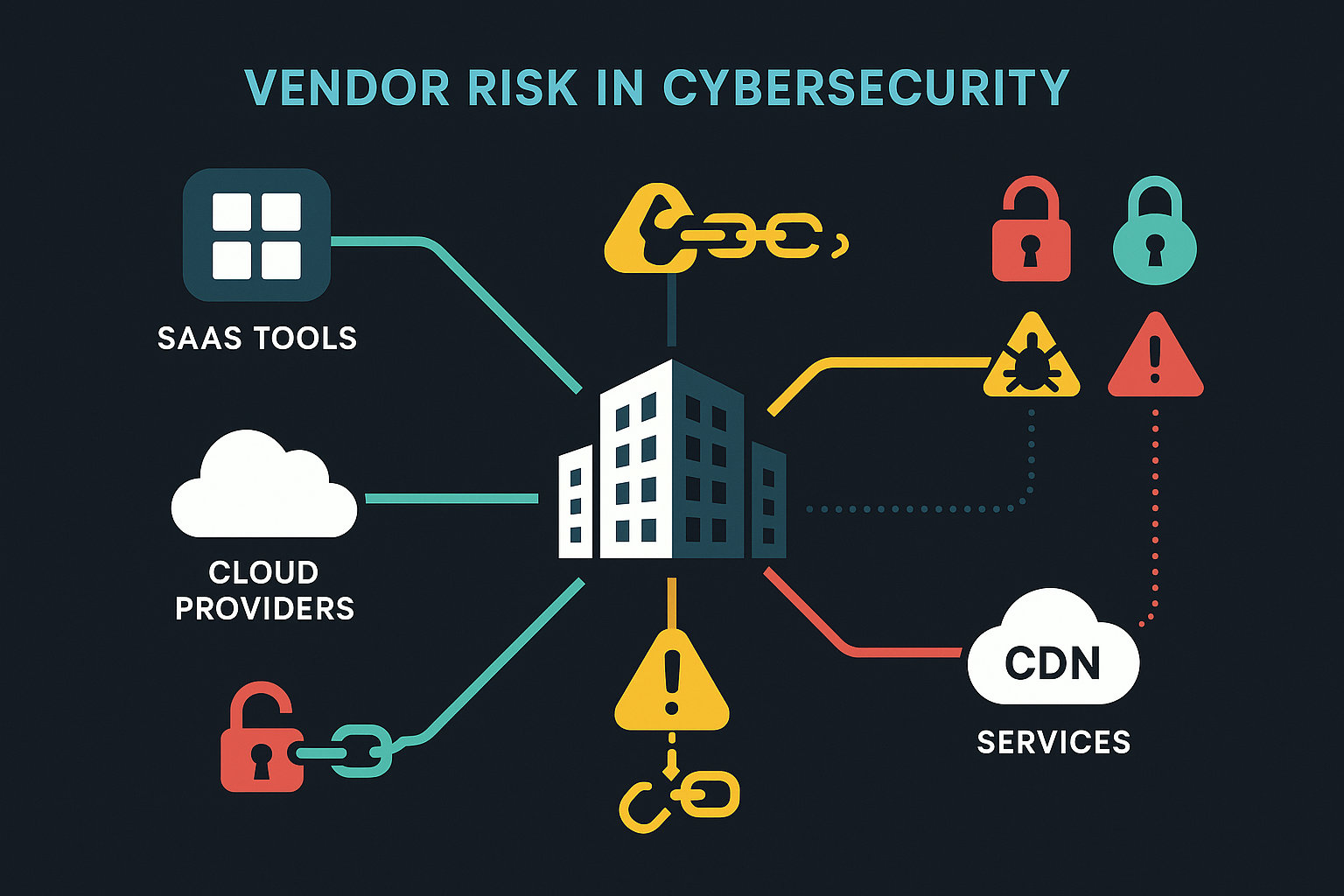
For example:
- A support portal maintained by a supplier can be accessed by attackers and used for targeted phishing or credential harvesting;
- A third-party JavaScript library hosted on a CDN can be compromised and inject malicious code into thousands of sites;
- A subdomain delegated to a marketing agency may have weak DNS configurations, enabling subdomain takeover;
- An analytics service can leak sensitive data through inadequate CORS configurations.
The reality is that you do not control your suppliers' security, yet you are responsible for the consequences if they are compromised.
The Digital Supply Chain: Layers of Dependency
The digital supply chain is not linear; it is a complex network of dependencies that extends across multiple layers:
1st Layer: Direct Suppliers
- SaaS tools (CRM, ERP, SIEM)
- Cloud providers (AWS, Azure, GCP)
- CDNs and DNS services
- Payment gateways
2nd Layer: Supplier Dependencies
- Open-source libraries used by suppliers
- Infrastructure subcontractors
- Outsourced authentication services
- Integration APIs
3rd Layer: Transitive Dependencies
- Dependencies of dependencies
- npm, pip, composer packages
- Containers and Docker images
- Plugins and extensions
4th Layer: Shadow IT
- Unauthorized tools
- Personal accounts in corporate services
- Undocumented integrations
- Forgotten tests and POCs
Each layer adds exponential complexity and risk. A vulnerability at any level can compromise the entire chain.
Attack Surface Management: End-to-End Visibility
Effective attack surface management is not limited to the assets you own; it must map and monitor the entire dependency chain, including:
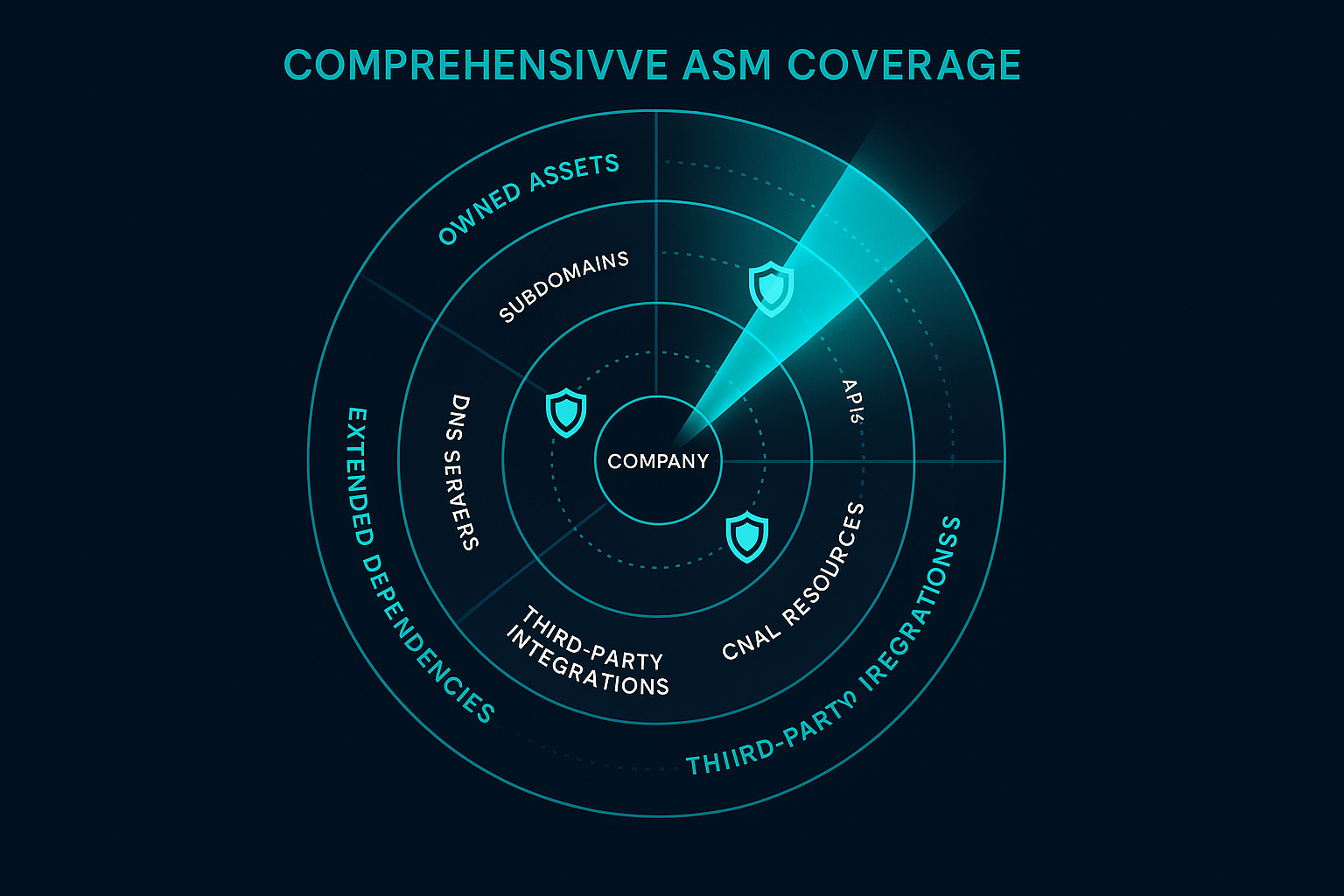
Continuous Discovery
- Subdomains delegated to third parties
- DNS servers (NS, MX, SRV) managed externally
- External resources (JavaScript, CSS, images, fonts)
- Third-party APIs integrated into your applications
- Code dependencies (libraries, frameworks, packages)
Risk Analysis
- Known vulnerabilities (CVEs) in dependencies
- Insecure configurations in outsourced services
- Expired or weak SSL certificates
- Sensitive data exposure through third parties
- Excessive permissions in integrations
Continuous Monitoring
- Real-time alerts on changes in the chain
- Shadow IT detection and unauthorized assets
- Supplier reputation monitoring
- Incident tracking in dependencies
How to Protect Your Digital Supply Chain
1. Complete Inventory
Maintain an up-to-date inventory of all suppliers, tools, and dependencies:
- Who are your direct suppliers?
- Which subdomains are delegated to third parties?
- Which external JavaScript libraries do you load?
- Which third-party APIs do your applications consume?
- Which DNS services do you not directly control?
2. Risk Assessment
Classify suppliers by criticality and exposure:
- Critical: Access to sensitive data or core systems
- High: Deep integration with infrastructure
- Medium: Productivity and collaboration tools
- Low: Peripheral services without data access
3. Continuous Monitoring
Implement 24/7 monitoring of the supply chain:
- Regular vulnerability scanning of dependencies
- Alerts on changes in delegated subdomains
- Detection of expired certificates
- Monitoring of security configurations
4. Security Policies
Establish clear policies for third parties:
- Due diligence before hiring suppliers
- Security clauses in contracts
- Periodic review of permissions and access
- Secure offboarding process
5. Incident Response
Have a response plan for compromises in the chain:
- Procedures to isolate compromised suppliers
- Communication with stakeholders
- Rotation of credentials and tokens
- Forensic analysis and lessons learned
The Role of ASM in Protecting the Digital Chain
A modern Attack Surface Management platform should offer:
✅ Automatic discovery of the entire dependency chain
✅ Mapping of relationships between assets and suppliers
✅ Risk analysis based on business context
✅ Proactive alerts on changes and vulnerabilities
✅ Integration with SIEM/SOAR for automated response
✅ Compliance reports for audits and certifications
Real Cases: When the Chain Fails
SolarWinds (2020)
The compromise of a monitoring tool affected 18,000 organizations, including U.S. government agencies. Attackers inserted a backdoor into a legitimate update.
Codecov (2021)
A compromised CI/CD script allowed attackers to steal credentials and tokens from hundreds of companies over months.
Log4Shell (2021)
A critical vulnerability in a widely used Java library affected millions of applications globally, including services from major suppliers.
Okta (2022)
The compromise of a support supplier allowed access to customer data on the authentication platform used by thousands of companies.
Conclusion: Security Is a Shared Responsibility
The digital supply chain is an inevitable reality of modern computing. Eliminating all external dependencies is neither possible nor desirable. The challenge is to manage risk intelligently.
Attack Surface Management provides the visibility and control needed to:
- Discover unknown assets and dependencies
- Assess risks across the entire chain
- Monitor changes continuously
- Respond quickly to incidents
The question is not whether your supply chain will be attacked, but when. Being prepared makes all the difference.